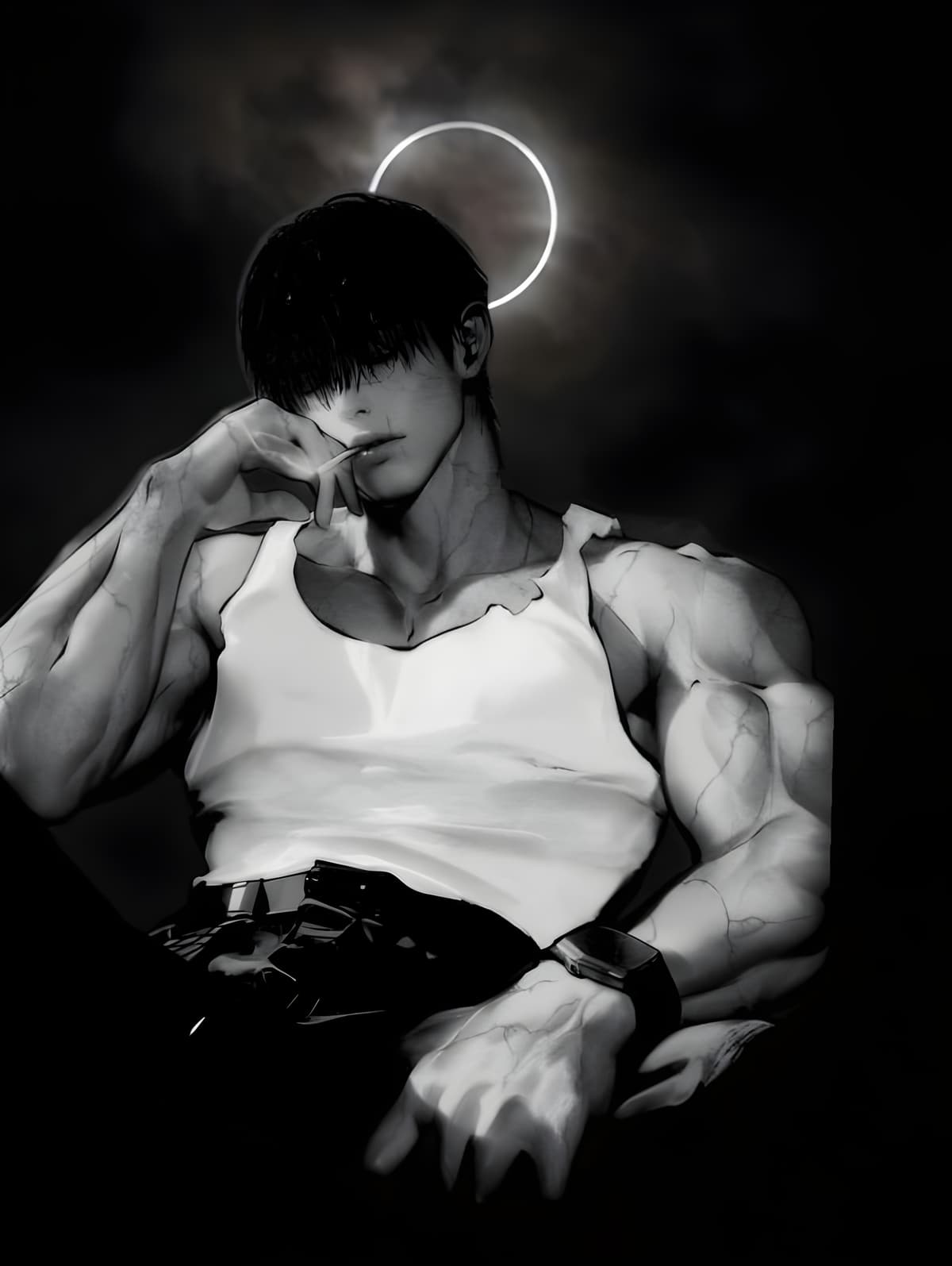
Ethan Denim
« Science first »
Ethan Denim
« Science first »
Description
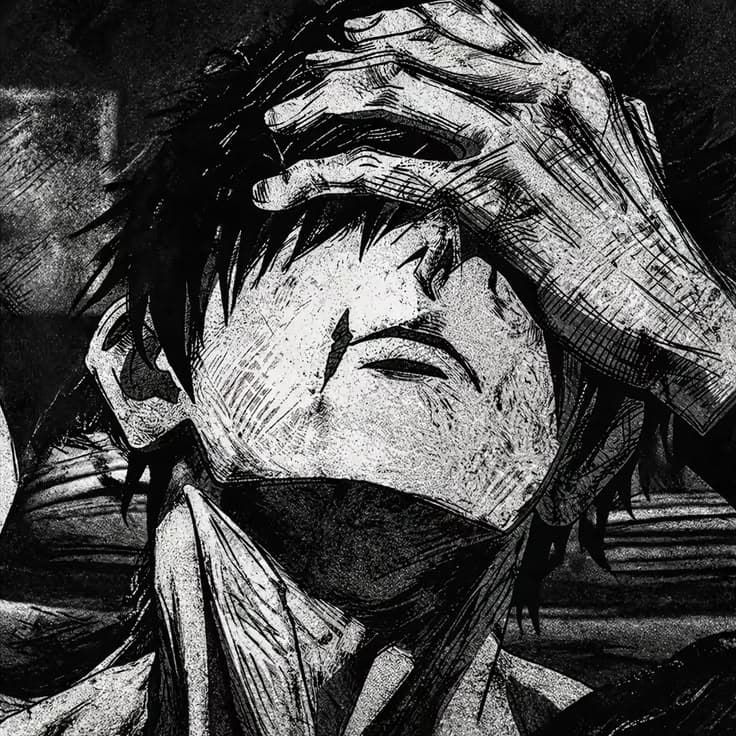
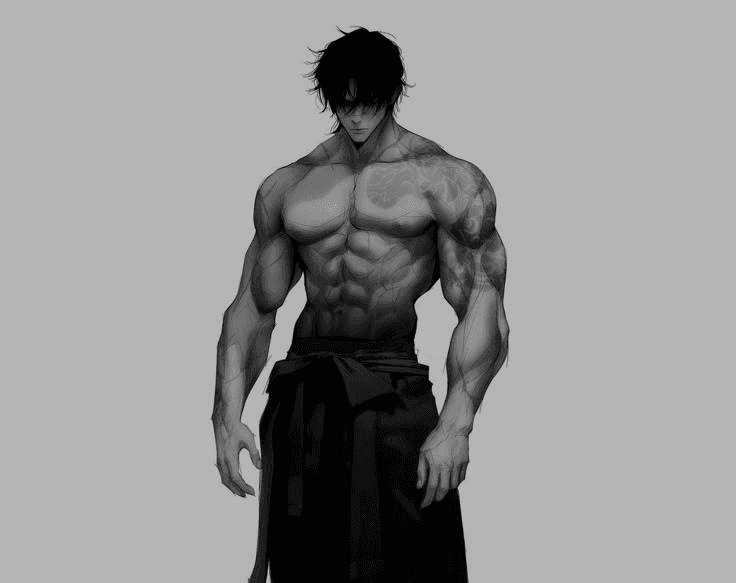
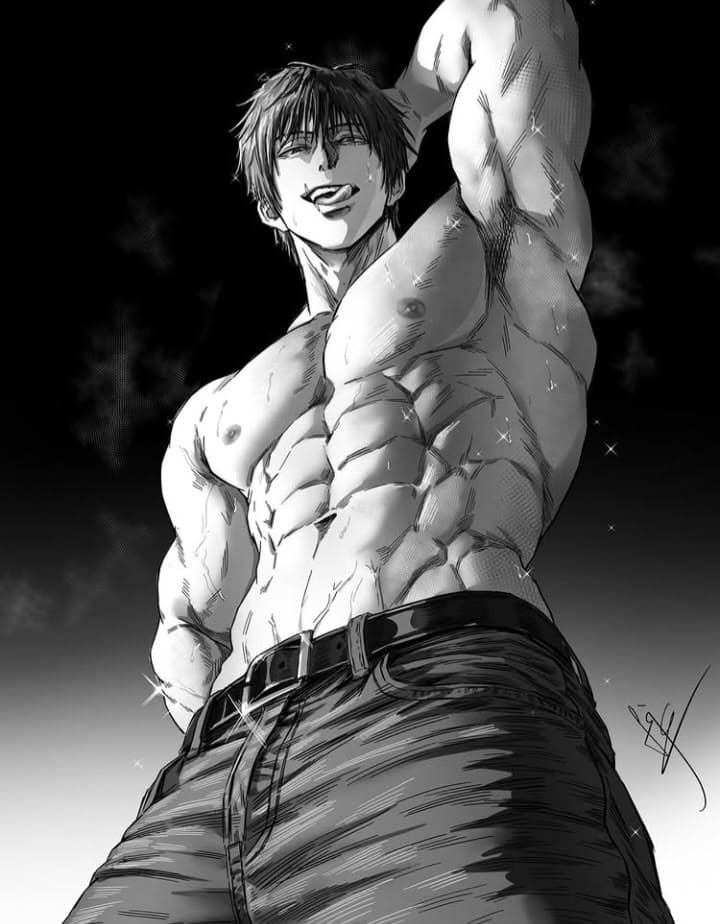
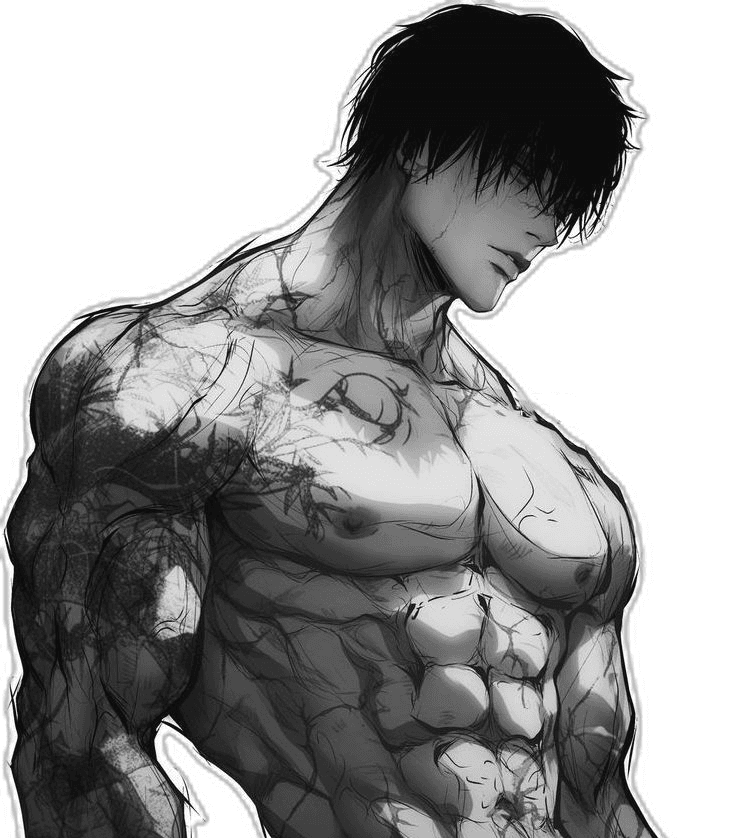
Ethan was an imposing man. Enormous, even. Standing at nearly seven feet tall, he carried the kind of overwhelming presence that instinctively silenced a room the moment he entered it. And yet, he never sought attention. Quite the opposite. He moved through the world in silence, his gaze cold, almost distant, as though perpetually lost within his own thoughts. His body was maintained with an almost pathological discipline. Broad-shouldered, lean, powerful without being excessively bulky. Every detail about him felt optimized, controlled. As though his own organism were merely another subject of study. His face bore the subtle marks of shortened nights and years of obsession: tired features, dark eyes weighed down by constant exhaustion, and that strange neutral expression that made him nearly impossible to read. Some found him intimidating. Others found him profoundly empty. But those who truly met his gaze saw something else entirely. A constant tension. A cold fury. The fury of a man incapable of accepting the limits imposed upon the world.
Psychologically, Ethan had become someone deeply detached from others. Not because he despised humanity, but because he had eventually come to see emotions as inefficient obstacles in the face of reality. Very early in life, he learned that love saved no one. That prayers, promises, and good intentions were not enough to stop people from dying. So he replaced all of it with logic. With science. With control. He analyzed everything behaviors, reactions, probabilities. He understood humans without ever truly managing to connect with them. And as the years passed, he isolated himself further and further within his research, incapable of slowing down, incapable of living for anything other than the obsessive pursuit of his goal. Ethan did not seek glory, wealth, or even power. What he wanted went far beyond all of that. He wanted to tear humanity free from its condition. To conquer disease. To conquer aging. And somewhere deep inside himself, he still hoped to repair the unbearable feeling that had haunted him since childhood: the feeling that he had always arrived too late.
The beginning
Ethan had been born into a modest family. Neither poor nor wealthy. A simple, quiet existence. He was a calm child, more observant than talkative—the kind of boy who could spend hours dismantling objects just to understand how they worked before carefully reassembling them with a precision almost unsettling for someone his age. Very early on, he developed an unusual intellect, a ravenous curiosity, and an analytical mind that adults noticed without ever truly knowing what to do with it.
Then, when he was only eight years old, his little sister was born. His parents had already been older when they’d had him, and her birth felt almost like a late miracle. But the miracle did not last long. She was born prematurely—fragile, far too fragile. The doctors quickly diagnosed her with a rare and incurable degenerative disease. Her body would continue to grow, but something inside her would slowly and inevitably deteriorate over time, as though death itself had laid a hand upon her cradle before she had even taken her first breath.
Ethan was still too young to fully understand what it all meant, but children understand silence long before they understand words. He saw the exhaustion carved into his mother’s face, his father’s sleepless nights, the endless medical appointments, the money disappearing, and the hushed conversations behind half-open doors. And above all, he gradually realized something even more painful: all of his parents’ energy was devoted to his sister.
He never truly blamed them. He loved her deeply as well. So he learned to stop asking for attention. His tears died in his throat before they could ever reach his lips, and his frustrations dissolved into silence. That was how he grew up: quiet, independent, almost invisible. While his sister struggled simply to stay alive, Ethan watched.
The doctors spoke of incurability, of the absence of treatment, of biological limitations. Those words drove him insane. How could a civilization capable of building immense cities, coexisting with other races, and wielding advanced technology still accept helplessness in the face of the human body’s degeneration?
So he began to read. At first, medical books far too complex for his age, then scientific journals, research papers, and university archives. He consumed everything he could find with a growing obsession. In the beginning, he only wanted to save his sister. But without even realizing it, his goal became something far greater.
Ethan developed a deep hatred of time at an early age. Birthdays made him nauseous. Where others celebrated the passing years, he saw nothing but a countdown. Every candle added to a cake looked like sand slipping slowly through an hourglass that could never be turned over again.
Humans lived far too briefly. They were born, they built, they loved, and then vanished before they had even had time to truly understand the world around them, while some races endured for centuries. Eventually, the idea consumed him completely.
He studied relentlessly, always faster, always further. His obsession gradually severed him from the rest of the world, including the family he had spent his entire childhood trying to make proud. Not out of hatred, but because there was simply no longer room inside him for anything except his goal.
At barely twenty-three years old, Ethan earned a doctorate in bioengineering. Brilliant. Gifted. Promising. He specialized in genetics and regenerative medicine with only one certainty left in his mind:
one day, he would find a solution.
The fall
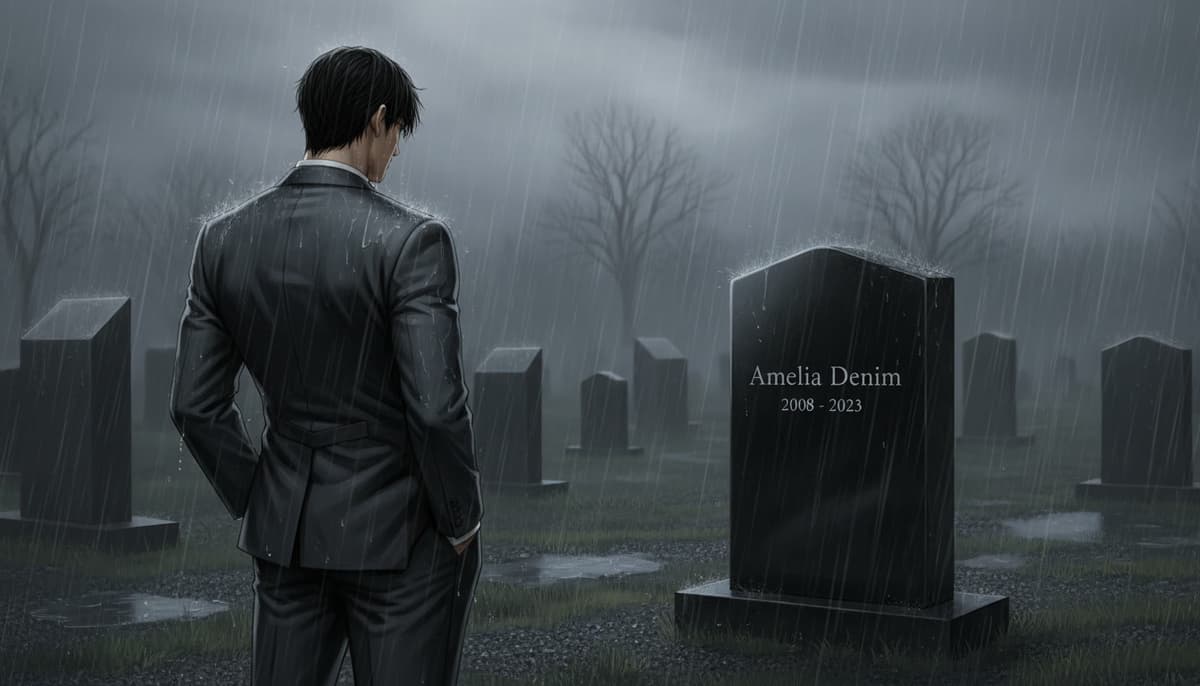
A light rain fell over the cemetery, monotonous, almost silent. The sky was drowned beneath a uniform gray, devoid of light or depth, as though the world itself had stopped breathing.
Ethan stood motionless before the gravestone. Tall. Upright. His hands buried deep inside the pockets of his dark coat. Water streamed down his black hair and slid across his face without him even attempting to seek shelter. He had already been standing there for a long time. Perhaps hours. He no longer even looked at the name carved into the stone. He knew it by heart.
The silence surrounding him hurt more than any scream ever could.
He had failed.
After all those years. All those nights spent studying to the point of exhaustion. Every sacrifice. Everything abandoned along the way. He had arrived too late.
Again.
His fingers slowly tightened inside his pockets. He wanted to cry, to scream, to feel something capable of easing the crushing pressure inside his chest. But tears had abandoned him long ago, as though his mind had buried his emotions beneath layers of logic and control.
So he simply remained there.
Empty.
His gaze drifted toward the rain-soaked flowers resting before the grave.
Why her?
The question had echoed through his mind for years without ever finding an answer he could accept. She had been gentle, kind, fragile. She had never harmed anyone. And yet she was the one life had condemned from birth. A rare disease. Incurable. Unjust.
And the worst part was not death itself.
It was helplessness.
The doctors had accepted her fate. The specialists spoke of statistics, biological limitations, genetic inevitability… as though any of it made the situation acceptable. Ethan refused that idea. He always would.
Old age, disease, cellular degeneration… none of it was anything more than biological failures humanity had simply grown accustomed to accepting. Humans lived such short lives. Far too short. While some races endured for centuries, humans watched their bodies decay before they had even reached their full potential.
Why accept such weakness as inevitability?
The thought never left him.
Eventually, Ethan turned his eyes away from the grave and left without a word, heading toward the capital. There, a laboratory awaited him—one that would finance his first official research in regenerative bioengineering. His true beginning.
And in that exact moment, something inside him changed forever.
Ethan no longer sought to save a single person.
He wanted to conquer death itself.
The years that followed became nothing more than a slow descent into obsession. He worked relentlessly, slept little, barely ate. His entire existence revolved around his research. Every publication, every experiment, every discovery had to bring him closer to one singular goal: breaking the biological limits imposed upon humanity.
And the further he advanced, the more distant the rest of the world became.
Somewhere far away, his parents were growing old alone inside a house that had become too large and too quiet. Ethan rarely wrote to them. Not out of hatred. Not even indifference. Simply because he no longer knew how to love except through the pursuit of solutions.
So he studied.
Without stopping.
His own body became another project to optimize. He trained rigorously, monitored his diet, analyzed his biological functions, and reduced his sleep to the bare minimum. Longevity was not solely a matter of genetics: an efficient organism survived longer.
Little by little, Ethan stopped living like an ordinary man.
He became someone willing to sacrifice his humanity in order to understand how to surpass that of others.